
There comes a point when knee pain is no longer just “manageable.” You try adjusting your routine, maybe avoid stairs, maybe sit down more often than before. But somehow, the discomfort keeps coming back. If this sounds familiar, then you are not alone.
What many people do not realise is that severe osteoarthritis builds up slowly. It does not appear overnight. In fact, by the time the pain becomes constant, the joint has already gone through significant wear and tear. This is usually when people begin to explore advanced options like robotic knee replacement, often after trying everything else.
Why Osteoarthritis Feels Worse Over Time
It can be nothing but stiffness at the beginning. Then it is intermittent pain. Even simple tasks like getting out of a chair are uncomfortable at some point.
This is because the padding in the knee reduces with time. Without that support, the joint starts to react to even the simplest movements. If you have been dealing with this for a while, then looking into knee osteoarthritis treatment in Mumbai can help you understand how far the condition has progressed and what can be done next.
What Actually Happens in Robotic Surgery
Now, here is where things get interesting. Many people assume that robotic procedures mean machines doing everything. That is not the case.
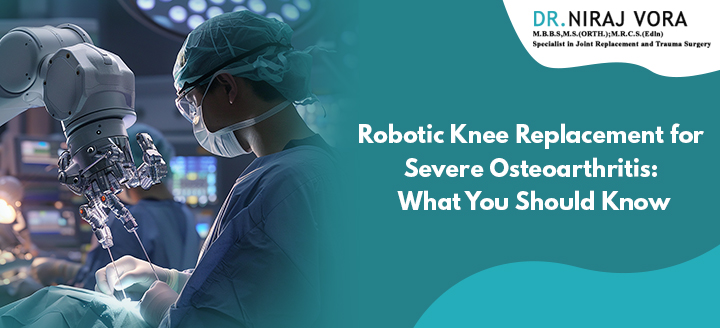
In robotic knee replacement surgery, the technology works alongside the surgeon, not instead of them. It helps map out the knee in detail before the procedure even begins. This allows the knee replacement surgeon to make more accurate decisions during surgery.
Think of it like having a highly precise guide that reduces guesswork. The control still remains in expert hands, but the execution becomes far more refined.
Things That Make This Approach Stand Out
If you are trying to understand why more people are considering this option, these points can help you get a clearer picture:
- More accurate planning before surgery
- Better fit and positioning of the implant
- Minimal disturbance to surrounding tissues
- Reduced strain on the knee after surgery
- Smoother movement post recovery
- Less discomfort in the initial recovery phase
- Improved balance while walking
- Greater confidence during daily activities
- Lower chances of alignment issues
- More predictable surgical outcomes
- Faster return to routine life
- Reduced dependency on support aids
- Better long-term joint function
- Enhanced precision during every step
- Overall improved patient experience
When Should You Start Considering It
Not everyone needs surgery, and that is important to keep in mind. However, if your day starts revolving around managing pain rather than living normally, then it might be time to explore better solutions.
A lot depends on the evaluation done by a specialist. If you are searching for the best robotic knee replacement surgeon in Mumbai, the focus should always be on experience and consistency in results rather than just availability.
Before and After the Procedure
One thing people often worry about is recovery. That is completely understandable. Surgery can feel like a big step.
With robotic knee replacement, the process is usually more structured. It is carefully planned in advance and rehabilitated afterwards. Patients are advised to take time and learn to move slowly rather than hurry to do so.
With time, a majority of the individuals will realise that the tasks that were initially challenging to handle begin to be easy to handle again.
Conclusion
The presence of knee pain in your life can gradually touch every aspect of your life, despite attempts to work around it. A difference can be observed by exploring the right treatment at the right time. Having a long experience of joint replacement and a high level of orthopaedic treatment, Dr Niraj Vora still helps patients to move to a more comfortable and active life.