
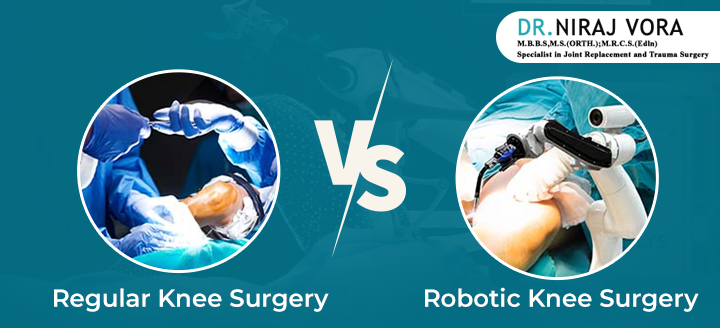
Knee replacement is a life-changing decision. It affects how you walk, how you sleep, and how much you can move without pain. For years, traditional surgery was the go-to option. But things have changed. Robotic systems are now helping surgeons perform the same procedure with more accuracy and fewer complications. The question many patients now ask is simple. Which one is better?
How Regular Knee Replacement Works
In a traditional knee replacement, the surgeon uses handheld tools to remove the damaged parts of the joint. They replace these with artificial components that are fixed to the thigh bone and shin bone. This process has been refined over decades. Many patients have seen long-term relief and improvement.
But the technique depends a lot on the surgeon’s eye and skill. Even a few degrees off in placement can affect the way your knee bends. Misalignment might lead to early wear or joint stiffness in the years ahead.
What Changes With Robotic Knee Surgery
Now imagine doing the same procedure with millimetre-level control. That is what happens during robotic knee replacement surgery. The process begins with a digital scan of the knee. This creates a 3D map of your joint. The surgeon then uses that map to plan the cuts and implant position in advance.
At the time of the surgery, a robotic arm follows the plan while the surgeon stays in full control. The system adjusts in real-time if anything unexpected comes up. The result is cleaner cuts, better alignment, and less damage to healthy tissue.
This is one reason many patients now ask for robotic knee replacement in Mumbai, where hospitals are adopting this technology across joint centres.
What Patients Gain From a Robotic Approach
Robotic assistance is not just about better numbers on a screen. It affects your recovery. Smaller cuts and better implant fit mean:
- Less pain after the operation.
- Reduced swelling and bruising.
- Shorter time in hospital.
- Earlier return to walking and daily movement.
Because of this, patients often feel more confident during recovery. It is not unusual to see people resume basic mobility within a few days of the procedure, especially when post-surgery care is well-managed.
How Cori Robotic Knee Replacement Adds More Control
One of the systems used widely today is the Cori robotic knee replacement. It does not need a CT scan before surgery. Instead, it maps the joint during the operation. That gives the surgeon a live model to work with, improving how the implant fits and moves.
This system also helps preserve more natural bone. That is important for younger patients or those who may need another procedure in the future. It keeps more of your own knee structure intact while improving stability.
It Still Depends on the Surgeon
While technology helps, experience still counts. A skilled robotic knee replacement surgeon knows how to adapt to unexpected challenges. The robot does not replace judgment. It supports it. That is why finding someone trained in both traditional and robotic methods is still the safest choice.
Conclusion
Both methods work. But robotic assistance is giving surgeons more control and giving patients better outcomes. With better alignment, smaller incisions, and faster recovery, robotic systems are changing what people expect from knee surgery. If you are thinking about joint replacement, it helps to know your options and ask the right questions. Sometimes, precision is what makes the biggest difference.