
Have you ever wondered why knee replacement surgery today is very different from what it was a decade ago? Medical science has come a long way, and patients now have access to treatment methods that focus not only on relieving pain but also on improving movement, comfort, and long-term results.
For many people living with severe knee pain, even simple activities such as walking, climbing stairs, or standing for a few minutes can become difficult. Medicines and physiotherapy may provide relief for some time, but when the knee joint is badly damaged, surgery often becomes the most suitable option.
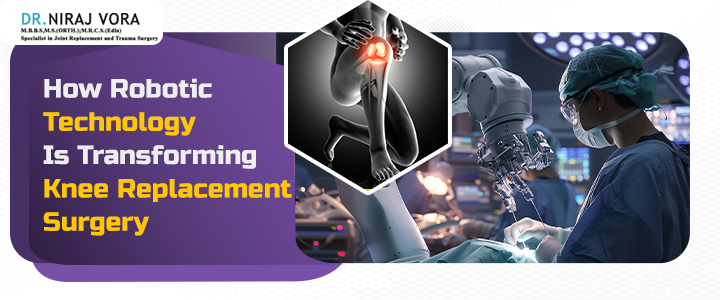
One of the biggest developments in this field is robotic knee replacement surgery. Many people assume that a robot operates on its own. That is not true. The surgeon remains in complete control throughout the procedure, while robotic technology provides valuable guidance that helps achieve a high level of accuracy.
What Is Robotic Knee Replacement Surgery?
A robotic-assisted knee replacement combines the knowledge and experience of an orthopaedic surgeon with advanced computer-guided technology. Before the surgery begins, detailed images and planning tools help create a customised surgical plan based on the patient’s knee anatomy.
During the procedure, the robotic system assists the surgeon by providing real-time information. This allows bone preparation and implant positioning to be carried out with greater precision while preserving as much healthy tissue as possible.
The robot never replaces the surgeon. It simply acts as an advanced surgical assistant that helps the surgeon make informed decisions throughout the operation.
Understanding Robotic Knee Surgery Vs Traditional Methods
When people compare robotic knee surgery vs traditional procedures, the biggest difference lies in surgical planning and precision.
Traditional knee replacement depends largely on manual instruments and the surgeon’s judgement throughout the operation. Experienced surgeons have delivered excellent outcomes using these techniques for many years.
This experience is transferred to robotic-assisted surgery, which offers detailed planning and feedback during the procedure. This helps the surgeon to make correct adjustments where necessary.
The objective of the two approaches is similar, and it is to alleviate pain, restore movement and enhance the quality of life of the patient. The technology merely provides additional guidance to assist the surgeon in the operation.
Who May Benefit from Robotic Knee Replacement?
Not all patients have knee pain for the same reason. Osteoarthritis, rheumatoid arthritis, previous injuries or wear and tear can damage the knee joint.
Patients who still have a lot of pain despite medication, physiotherapy, injections or lifestyle changes may be advised to consider knee replacement surgery after due consideration.
The patients seeking to undergo robotic knee replacement in Mumbai usually desire to know whether they are fit to undergo this high-tech surgery. It is never done without a comprehensive medical examination, radiological tests and the overall evaluation of the surgeon of the patient.
In the process of seeking a robotic knee replacement surgeon, patients must look at the experience of the surgeon, his/her knowledge in joint replacement surgery, patient results, and capability to prescribe the most appropriate treatment depending on the needs of the patient.
A Step Towards Better Mobility
The presence of knee pain in everyday life may gradually influence all aspects of life. It may not be possible to walk, travel, spend time with family, or even leave a chair. The existing technology is assisting in altering that experience by being more precise in surgery and maintaining patient care as the focus of all choices.
Should you be planning to undergo joint replacement and you wish to learn more about robotic knee replacement surgery, it is always best to consult an experienced specialist. Dr Niraj Vora is a highly experienced joint replacement surgeon who still assists patients to be able to walk again and lead a more active and comfortable life.