
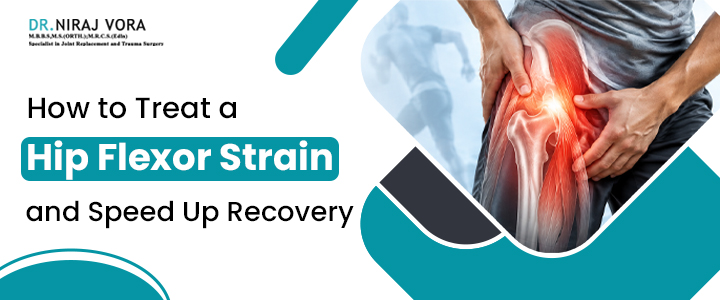
Have you ever felt a sudden pain at the front of your hip after running, exercising or even making a quick movement? You may think it is just normal muscle soreness and will settle after some rest. While this can be true in some cases, pain around this area can also point towards a hip flexor strain.
The hip flexors are a group of muscles that help you lift your knee and move your leg towards your body. When these muscles are stretched beyond their capacity or overloaded, small tears can develop. The pain may be mild at first or sharp enough to make walking difficult. So, what should you do next? Proper hip flexor strain treatment starts with understanding the severity of the injury and giving the muscle enough time to recover.
How Do You Know If You Have a Hip Flexor Strain?
A strained hip flexor usually causes pain at the front of the hip or around the groin. You may notice that the discomfort becomes worse when you lift your knee, climb stairs, run or get up from a chair.
Some people also experience tenderness, swelling, muscle weakness or a reduced range of movement. A more serious strain can even make normal walking uncomfortable.
How Do You Treat a Strained Hip Flexor?
If you are wondering how do you treat a strained hip flexor?, the answer depends on how badly the muscle has been injured. Mild strains can often improve with conservative care.
During the first few days, avoid activities that trigger pain. Applying a cold pack for around 15 to 20 minutes at a time may help with pain and swelling. Once the initial discomfort starts settling, gentle movement can be introduced gradually.
Do not rush back to exercise just because the pain has reduced. The muscle may still need time to regain its strength.
What Is the Fastest Way to Recover From a Hip Flexor Strain?
People naturally want to return to their regular activities as soon as possible. So, what is the fastest way to recover from a hip flexor strain? Trying to push through the pain is rarely the answer.
Recovery usually works better when you gradually restore movement and strength. Depending on the injury, your recovery plan may include gentle stretching, strengthening exercises and a controlled return to physical activity.
The key here is progression. If an exercise causes sharp pain, forcing the movement can aggravate the injured muscle.
How Long Does Recovery Usually Take?
Another common question is, how long does a hip flexor strain take to heal? There is no single recovery period that applies to everyone.
A mild strain may improve within a few weeks, while a moderate or severe injury can take longer. Your age, general health, severity of the muscle damage and activity level can all affect recovery.
If the pain continues, keeps returning or interferes with walking and daily activities, getting the hip examined is a better option than continuing home treatment.
When Should You See a Hip Specialist?
Not every pain around the hip comes from a strained muscle. Groin injuries, tendon problems, arthritis and other hip conditions can produce similar symptoms.
You should consider medical assessment if the pain is severe, you cannot comfortably put weight on the leg, there is significant swelling or bruising, or symptoms fail to improve. An examination can help identify what is actually causing the pain and determine the appropriate treatment.
Getting the Right Treatment in Mumbai
Finding the cause of persistent hip pain is the first step towards choosing the right care. If you are searching for hip flexor strain treatment in Mumbai, a proper orthopaedic assessment can help determine whether you have a muscle strain or another hip problem.
Patients searching for a hip pain specialist in Mumbai or hip specialist in Mumbai can consult Dr Niraj Vora for evaluation and treatment. With extensive experience in orthopaedics, hip replacement and joint care, Dr Niraj Vora can assess the condition and recommend treatment based on the individual patient’s symptoms and needs.