
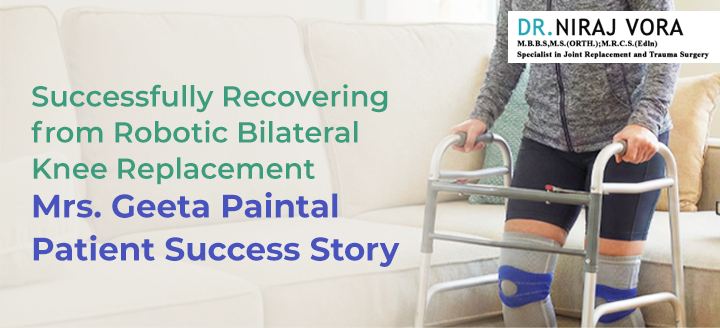
Joint pain is not just about discomfort. It changes how a person walks, stands, sleeps and lives. For many patients with osteoarthritis, knee movement becomes painful and unpredictable. Simple actions like climbing stairs or sitting cross-legged become difficult. When pain affects daily function and medication no longer works, surgery is often considered.
In recent years, robotic technology has been added to this process. It helps surgeons plan with more accuracy. The procedure helps patients recover with greater confidence. In India, this approach is gaining popularity in cities like Mumbai, where access to advanced tools and trained doctors is steadily improving.
Meet Mrs Geeta Paintal: A Story of Recovery
Geeta Paintal had been living with osteoarthritis for several years. She was 68 when her condition worsened. The pain had increased and daily tasks were becoming impossible. In her words, “Hi, I’m Geeta Painter. I’m 68 years old. I’ve been having osteoarthritis for many years, and I was in a lot of pain. I had trouble bending, sitting, standing, and climbing stairs. From January onwards, it was really becoming very bad.”
Her consultation led to a recommendation for surgery. Dr Niraj Vora observed her condition and explained the need for a surgical solution. “I had a look and suggested that she should undergo bilateral knee replacement in order to restore her quality of life. She is extremely young for her age, very, very active.” The team decided on a new material known as oxidized zirconium. It is strong, smooth and expected to last up to 35 years.
According to Dr Vora, this material has changed how people approach knee surgery. “Previously, we were told that a knee replacement would last for maybe 10, 15 or 20 years. As a consequence, patients would delay their surgery, putting up with a lot of pain and compromised lifestyles. With this zirconium technology, that does not have to happen. Patients as young as 45 to 50 are having these operations because they know that this will last them all the way into their 80s.”
Choosing the Best Robotic Joint Replacement Surgeon in Mumbai
Patients want long-term results. The right surgeon is key. Those searching for the best robotic knee replacement surgeon in Mumbai often review experience, technique and case history. A strong background in robotic systems combined with a high volume of successful outcomes builds trust.
Several hospitals in Mumbai are now performing robotic knee replacement surgery in Mumbai for both single and robotic bilateral knee replacement in Mumbai cases. The goal is consistent. Replace the damaged joint. Preserve alignment. Ensure early return to movement.
The Robotic Bilateral Knee Replacement Procedure
Robotic tools allow surgeons to work with 3D planning. The bone cuts are precise. The implant position is carefully checked. The robotic arm does not act on its own. It supports the surgeon’s hand with feedback. This helps protect soft tissues. It also improves how the implant sits and moves. When performed correctly, the chances of needing a revision surgery are lower.
Recovery and Post-Surgery Care
Recovery begins with movement. Patients stand with assistance often within the first two days. Pain reduces gradually. With therapy, strength returns over weeks. Walking aids are used until balance and confidence are restored. Many people report improved sleep, posture and energy. These robotic knee surgery success stories are not rare. They are now becoming the norm in joint care.
Conclusion
Advanced tools do not replace skill. They support it. Choosing a robotic joint replacement surgeon in Mumbai allows patients to access both precision and care. For people like Geeta Paintal, the difference is already clear. She can walk, bend and climb again. For others living with the same pain, this is no longer a distant possibility. It is a proven pathway back to movement.